The women on The Hill are prostitutes. They seem more "homeless" than the rest. Like hitchhikers who are never allowed to sleep except for short naps in the cars of strangers. We ask someone to interpret the Chinese characters adorning Mr. Lee's hut. "The Great Inventor lives here." Inside, he has various "rooms". This one belongs to the Queen of Germany, this other to the Queen of Italy, another belongs to the Queen of China, and so on. He explains to me he has 500 wives. Another sign on the outside reads, "House of the United Nations." One more says "Help wanted. Need many workers."
I wake most mornings at just after sunrise. More than likely, it is not the birds that wake me, but the early rush hour traffic on the Manhattan Bridge that is twenty feet away. Mr. Lee is already outside. At dawn he begins his unique Tai Chi. His hut is created anew each day, a maze of fresh knots holding in place newly written-upon walls and collected ornaments. He recites aloud in Cantonese the message of the day. The Hill is in the middle of Chinatown, and in the early morning there are many people in all the small parks practicing Tai Chi. An artist, Mel Chin, stopped by one night. He told me that some Chinese magicians had revealed to him that The Hill was "The Mouth of the Dragon." He asked if anything strange was going on. Perhaps he didn't see the tepee or Mr. Lee's hut with its 10,000 knots, its 10,000 Chinese characters, 10,000 adornments from the Tao.
After his daily morning ritual, Mr. Lee leaves and walks the streets picking up 10,000 new things. He carries four or five burlap bags. The big mystery to everyone is what is in those bags. So typically some say the bags are full of money. One of the signs on his hut says, "Man with money, comes and goes here."
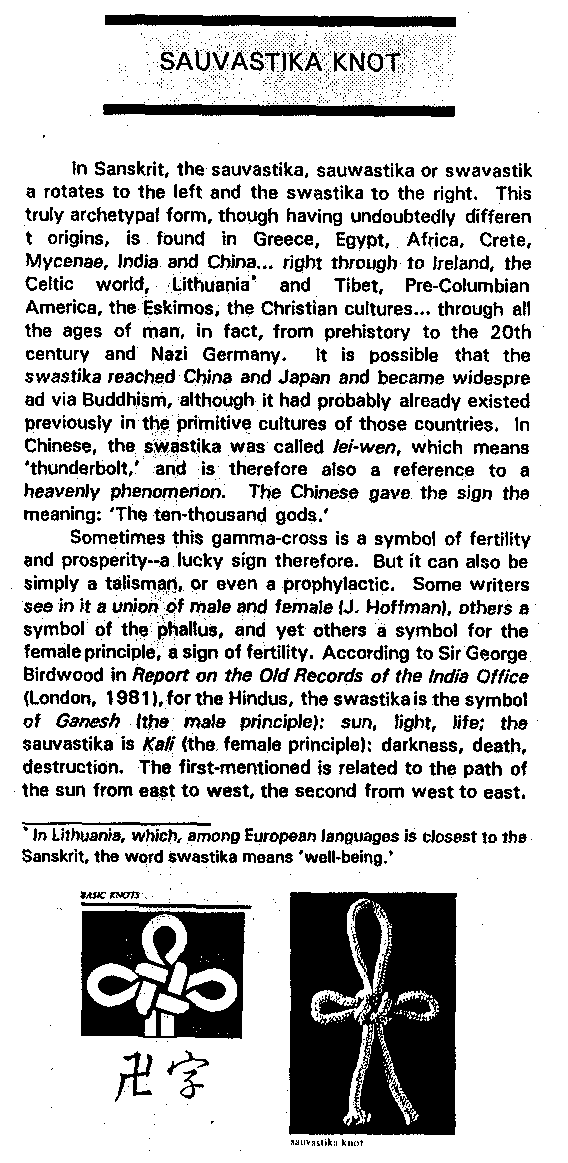
I say that I followed him one day and saw what he put in the bags. "Don't be stupid, there's nothing in there but junk. The same junk you see all over his hut." I keep Mr. Lee's secret and study his knots. Gabriele has bought a book on the nearly lost art of Chinese knotting, the symbolic communication that predates the Book of Changes and gives a record of "wild history." Perhaps a precursor of Chinese written characters.

